Glass and mirrors, cut to your wall.
Mirrors, splashbacks, shelves and shower screens, cut to the millimetre and edged by hand. Shape a mirror and see it on the wall.
- Glass
- 0.72 m²
- Edge to polish
- 3.30 m
- Weight
- 7.2 kg
Which glass goes where
| Glass | What it is | Where it goes | mm |
|---|---|---|---|
| Clear float | Everyday clear glass, with a green tint on its edge. | Shelves, table tops, picture frames | 4 · 6 · 8 · 10 |
| Low-iron | Without the green: clear edges and true colours behind it. | Display cases, splashbacks, cabinets | 6 · 8 · 10 |
| Toughened | Heated and cooled fast: four to five times stronger, and breaks into small blunt pieces. | Shower screens, doors, table tops | 6 · 8 · 10 |
| Laminated | Two panes bonded to a film that holds the pieces if it breaks. | Balustrades, low glazing, roofs | 6.4 · 8.8 · 10.8 |
| Back-painted | Toughened glass painted on the back in the colour you choose. | Kitchen splashbacks, wall panels | 6 |
| Satin | Etched on one face: lets the light in, blurs the view. | Bathroom doors, partitions | 4 · 6 · 8 |
| Mirror | Silver, bronze or grey, cut and edged like any glass. | Walls, wardrobes, furniture | 4 · 6 |
Four edges
The edge is the one part of the glass you touch. Drawn here in section, ten times its size.
Arrised
The sharp corners sanded off. Safe to handle, for glass that sits in a frame or a groove.
Flat polished
A square edge polished to a shine, for every edge that is on show.
Pencil polished
Rounded over and polished. Soft to the hand, for shelves and table tops.
Bevelled
A wide slope polished into the face, 10 to 30 mm. It frames a mirror in its own light.
From the sheet to your wall
Your size or your template
Type the size for a straight piece. For shapes, holes and cut-outs, upload a drawing or a traced template.
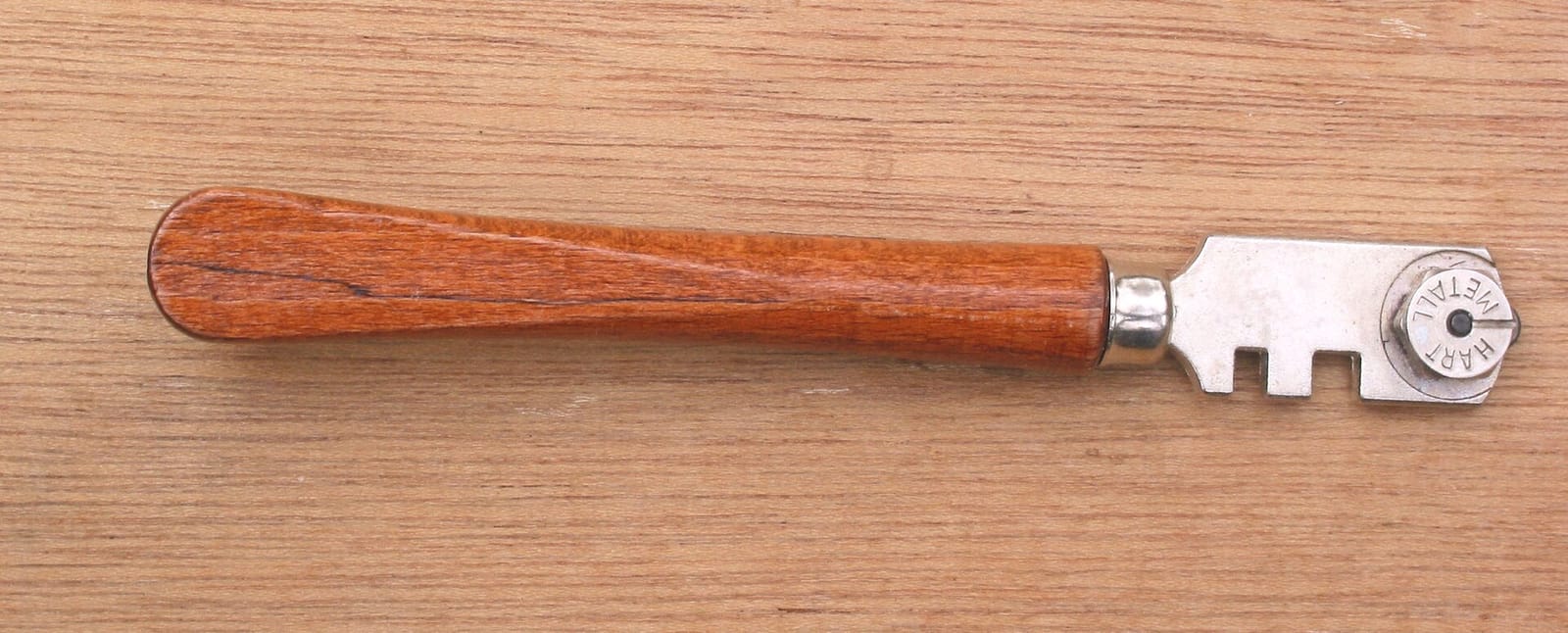
Scored and snapped
A wheel scores the face; the glass breaks clean along the line.
Edged
Every edge is arrised, polished or bevelled on the edging line.
Toughened, if it needs to be
Holes and sizes are cut first: toughened glass cannot be cut afterwards.
Packed upright
On a rack with the corners covered, as glass travels best.
Measure twice. We cut once.
Three times each way
Measure the width at the top, middle and bottom, and the height at both sides and the middle. Use the smallest.
Leave a gap in a recess
Glass going into a recess or between cupboards needs 2 to 3 mm off each side, for walls that are never quite straight.
Sockets, taps and odd shapes
Trace the shape on card, or draw it with the cut-outs marked, and upload it. It is cut from that.
Before you order
Can toughened glass be cut to fit afterwards?
No. Toughened glass shatters if it is cut or drilled, so every size and hole is made before it goes in the furnace. Measure carefully.
Can you drill holes and make cut-outs?
Yes, from a drawing: holes for screws and fixings, notches, and cut-outs for sockets and taps. Upload it with the order.
Will clear glass look green?
Ordinary glass shows a green tint on its edge, more so the thicker it is. Low-iron glass does not, which matters for splashbacks and display cases.
How do I hang a heavy mirror?
Mirrors over about 25 kg want mirror clips or a hanging rail into the wall, not only adhesive. The weight is worked out for you above.
Which glass is safety glass?
Toughened and laminated. Doors, shower screens, low glazing and balustrades need one of them.
Your wall, in glass.
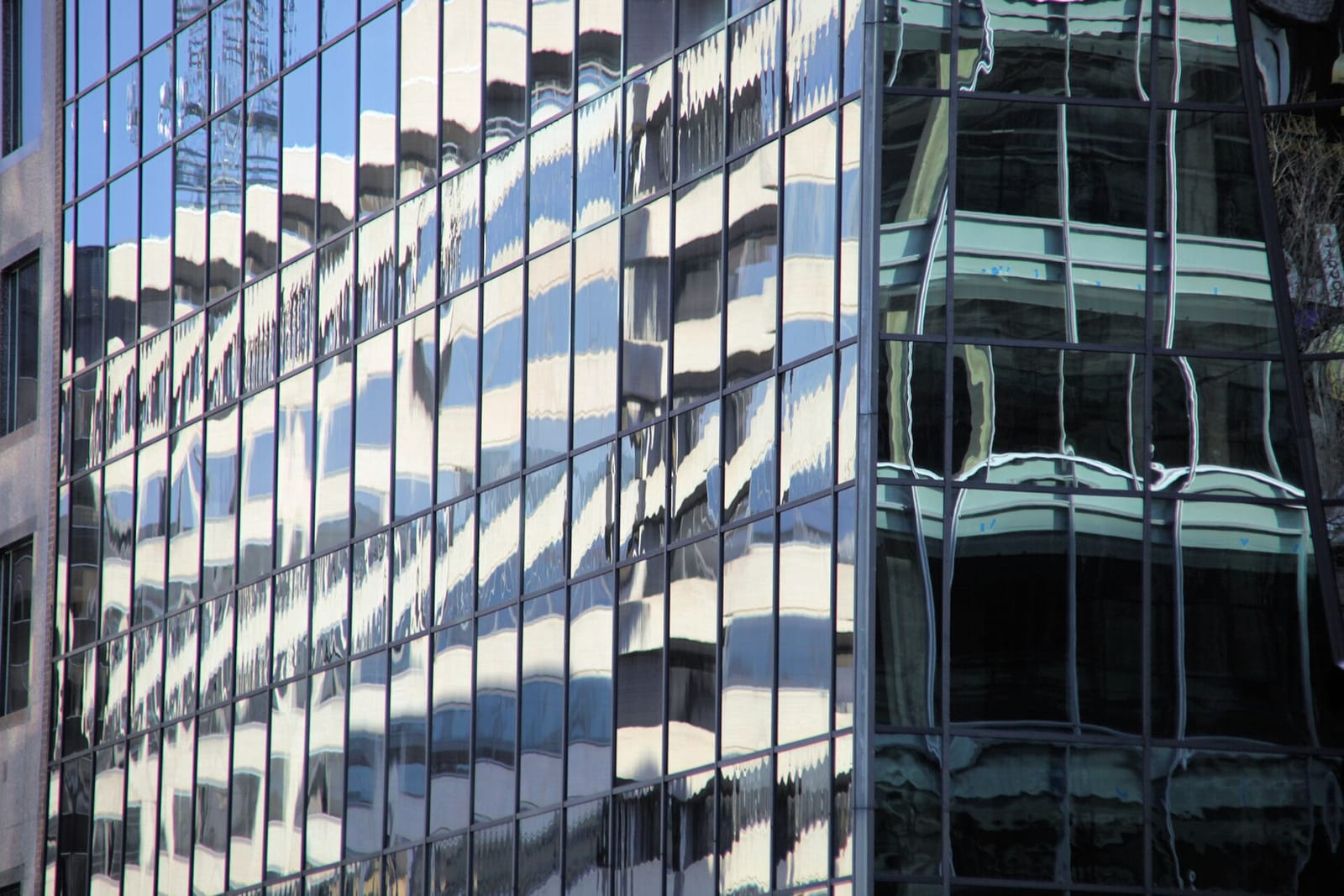
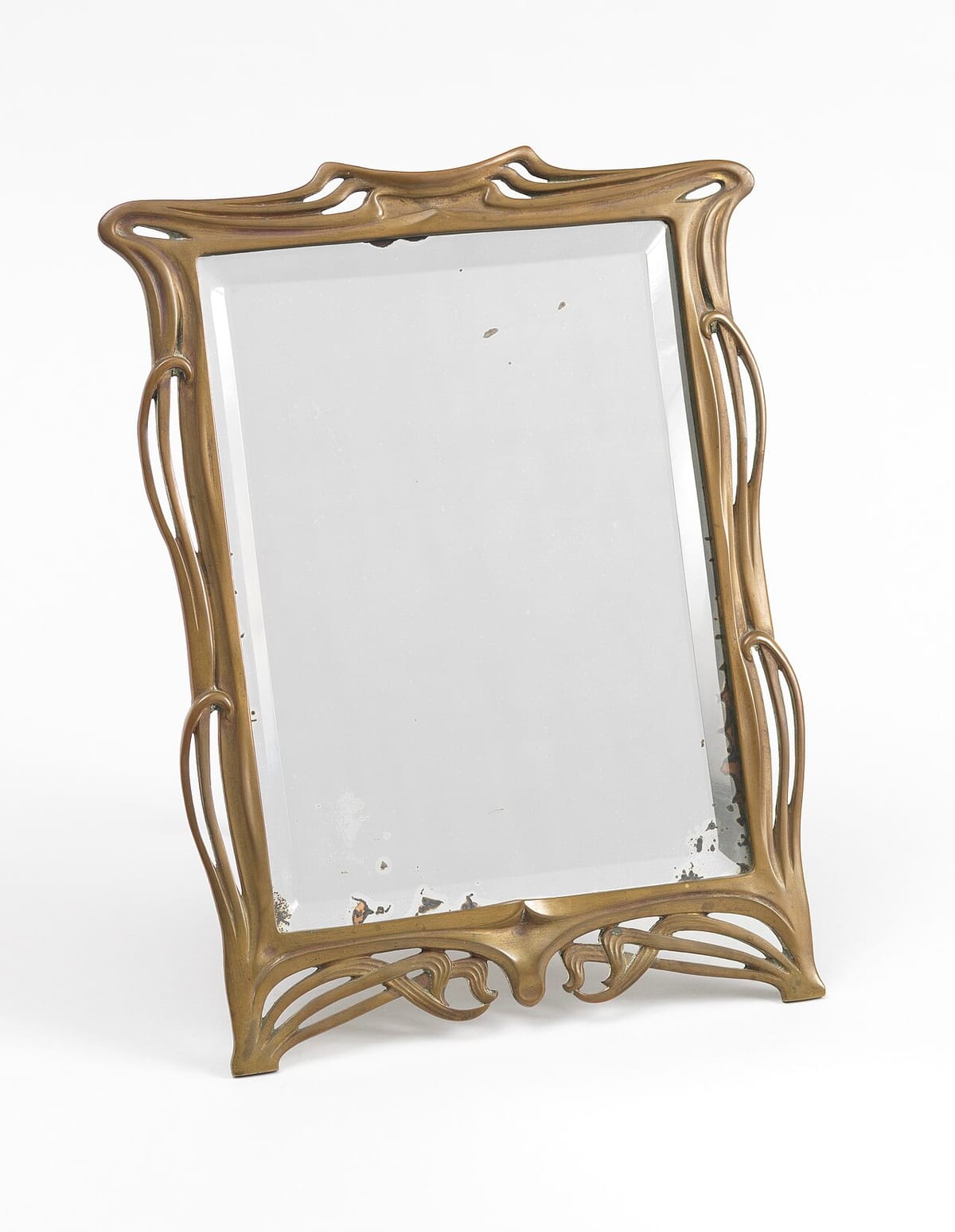
Pictures from Wikimedia Commons: View of Aarhus seen from inside Dokk1 Aarhus Main Library, Ciara Ní Riain, CC BY-SA 4.0; Mirror, ca. 1910, Cooper Hewitt, Smithsonian Design Museum, public domain; Glassnijder, Rasbak, CC BY-SA 3.0; Sunrise reflected in a glass facade, Quebec City, Wilfredor, CC0; 1900 M Street NW, curtain wall detail, Tim1965, CC BY-SA 3.0.